
Adaptive Learning & Product Systems Design
Instructional Design Frameworks + UX Case Study & Wireframe
Designing MathPro
MathPro is a three-part EdTech systems design project exploring how adaptive learning, instructional analytics, continuous improvement frameworks, and UX design can function together within a scalable digital learning environment. The project began with the development of an adaptive assessment strategy framework focused on instructional decision-making, learner analytics, personalization, and behavioral engagement systems within an asynchronous learning platform.
The second phase expanded the project into a continuous improvement and learning analytics framework designed to demonstrate how learner performance data, engagement signals, and behavioral trends could continuously inform instructional refinement, adaptive pathway optimization, and long-term product improvement. Together, these systems were designed to function as a self-improving learning ecosystem capable of evolving through ongoing learner interaction and measurable instructional evidence.
The final phase translated these systems into a user-facing product experience through UX wireframes and a case study focused on the MathPro website structure, onboarding experience, and checkout process. This portion of the project explored how user-centered interface design, navigation flow, and conversion-focused decision-making could support both learner engagement and product usability within the broader adaptive learning ecosystem.
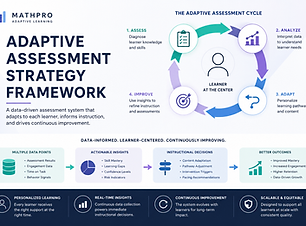
Adaptive Assessment Systems Framework
Explore my design of a scalable adaptive assessment framework built to support personalized learning, real-time instructional decision-making, learner analytics, and continuous product improvement within an asynchronous EdTech environment.
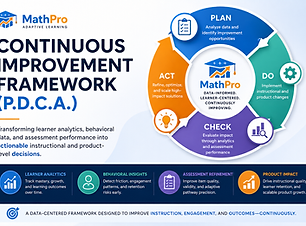
Continuous Improvement Strategy
Explore the continuous improvement framework designed to transform learner analytics, behavioral engagement data, and assessment performance into actionable instructional and product-level decisions that support scalable personalization, learner retention, and long-term system improvement.

UX Case Study & Wireframe
Explore the UX wireframes and case study developed for the MathPro learning platform, including website structure, onboarding flow, and checkout experience designed to support usability, learner engagement, intuitive navigation, and conversion-focused decision-making.